
OFFERING
Education & Learning
Build learning that people can understand, apply and carry forward.
Ghosh Intelligence works with institutions, businesses and educators that need learning to connect more closely with practice. The work can begin with a new programme, an existing curriculum that needs improvement, a corporate capability gap, faculty development or the introduction of AI into teaching and learning.
The focus is on creating learning experiences that are clear, relevant and usable, with attention to what people need to know, how they will apply it and how progress should be assessed.
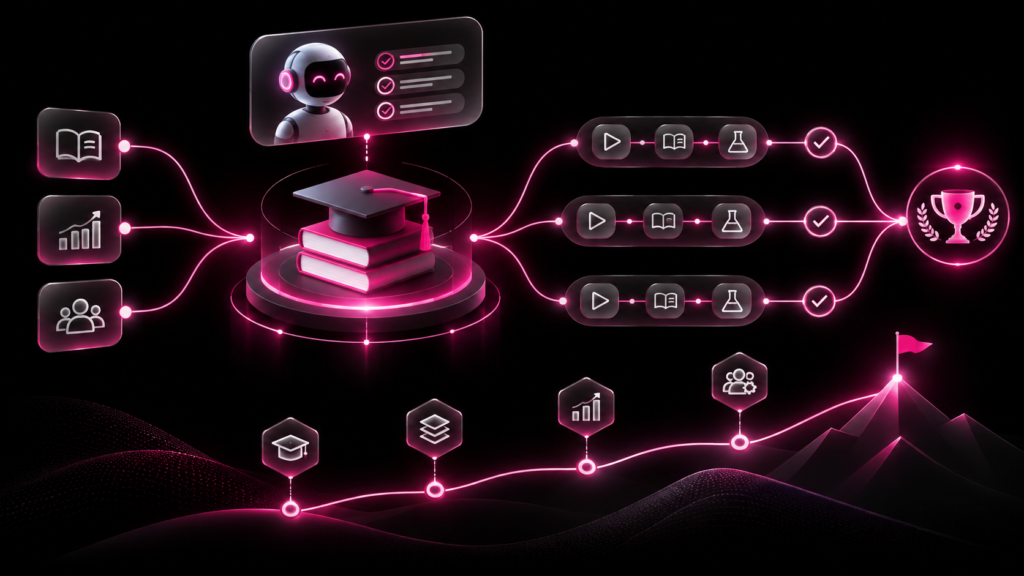
WHAT THE WORK COVERS
From learning needs to practical capability
Effective learning depends on more than content. It needs clear outcomes, relevant material, an appropriate learning structure and a way for people to practise, apply and demonstrate what they have understood.
Ghosh Intelligence can support individual learning initiatives or broader education programmes across six areas.
01
Executive and business education
Designing learning for leaders, managers and professionals around business, strategy, growth, technology and AI-related topics.
02
Corporate learning programmes
Creating structured learning experiences around organisational capability needs, with attention to relevance, application and the realities of how people work.
03
Curriculum design
Developing or improving curricula, course structures, module sequences, learning outcomes and supporting materials for academic or professional programmes.
04
Faculty development
Supporting educators in strengthening course design, teaching approaches, assessment methods and the practical use of technology and AI in learning.
05
Assessment and learning evaluation
Designing assessment approaches that help determine whether learners have understood the material and can apply it in realistic contexts.
06
AI-integrated teaching and learning
Helping institutions and educators incorporate AI into teaching, learning and assessment in ways that support capability rather than simply adding another tool.
TYPICAL QUESTIONS WE HELP ANSWER
Good learning starts with clarity about what people need to be able to do.
The work usually begins by identifying the capability gap, the learner context and the practical outcome the programme needs to support.
01
What should learners actually be able to do by the end?
Defining clear learning outcomes that connect knowledge with application rather than treating content coverage as the main measure of success.
02
How should the programme be structured?
Determining the right sequence of topics, activities, practice and assessment so that learning builds logically and remains manageable for participants.
03
Is the content relevant enough to the learner?
Reviewing whether examples, exercises and teaching materials reflect the realities, decisions and problems learners are expected to encounter in practice.
04
How should learning be assessed?
Designing assessments that test understanding, application and judgement rather than relying only on recall or completion.
05
Where can AI improve teaching or learning?
Identifying where AI can support preparation, practice, feedback, content development or learner support without weakening the quality of the learning experience.
06
How do we know whether the learning is working?
Defining practical ways to evaluate participation, understanding, application and capability development so that the programme can be improved over time.
ENGAGEMENTS & DELIVERABLES
Learning works better when the structure supports the outcome.
Some engagements focus on a single programme, course or capability gap. Others involve a broader redesign of curriculum, assessment, faculty practice or the way AI is incorporated into teaching and learning.
Executive education programme
A structured programme for leaders, managers or professionals, including learning outcomes, content architecture, session flow, activities and supporting materials.
Corporate learning programme
A learning intervention built around a defined organisational capability need, with clear objectives, practical application and an appropriate delivery structure.
Curriculum and course design
A complete or revised curriculum covering learning outcomes, module structure, sequencing, teaching materials, activities and assessment requirements.
Faculty development programme
A structured programme to help educators strengthen course design, teaching practice, assessment and the effective use of technology or AI in learning.
Assessment framework
An approach to evaluating understanding, application and judgement through assessments that reflect the intended learning outcomes.
AI-integrated learning design
A practical design for incorporating AI into teaching, learning, feedback, assessment or learner support while preserving the quality and purpose of the learning experience.
FROM LEARNING GOALS TO PRACTICAL APPLICATION
The design starts with what people need to learn and use.
The exact shape of the work depends on the audience and context, but it generally moves through four stages.
Define the learning outcome
Start by clarifying what learners need to understand, apply or demonstrate, and the context in which that capability will be used.

Shape the learning experience
Organise the content, sequence, activities and teaching approach so that the programme supports the intended outcome rather than simply covering material.
Build practice and assessment into the design
Create opportunities for learners to apply what they are learning and use assessment to test understanding, judgement and practical application.
Refine the programme through evidence
Use learner response, assessment results, feedback and delivery experience to identify what should be strengthened, simplified or changed.
DISCUSS YOUR LEARNING REQUIREMENT
Start with the capability you want to build.
If you are designing a new programme, improving an existing curriculum, strengthening faculty capability or exploring how AI should be used in teaching and learning, we can begin with the outcome and determine what kind of learning design and support are needed.